
Built for Individual LTC Homes and Hospitals
EMERGENCY COLOR CODES
AUDIT READINESS &
EMERGENCY COMPLIANCE
Eliminate Gaps & Ensure 100% Protocol Compliance During Inspections
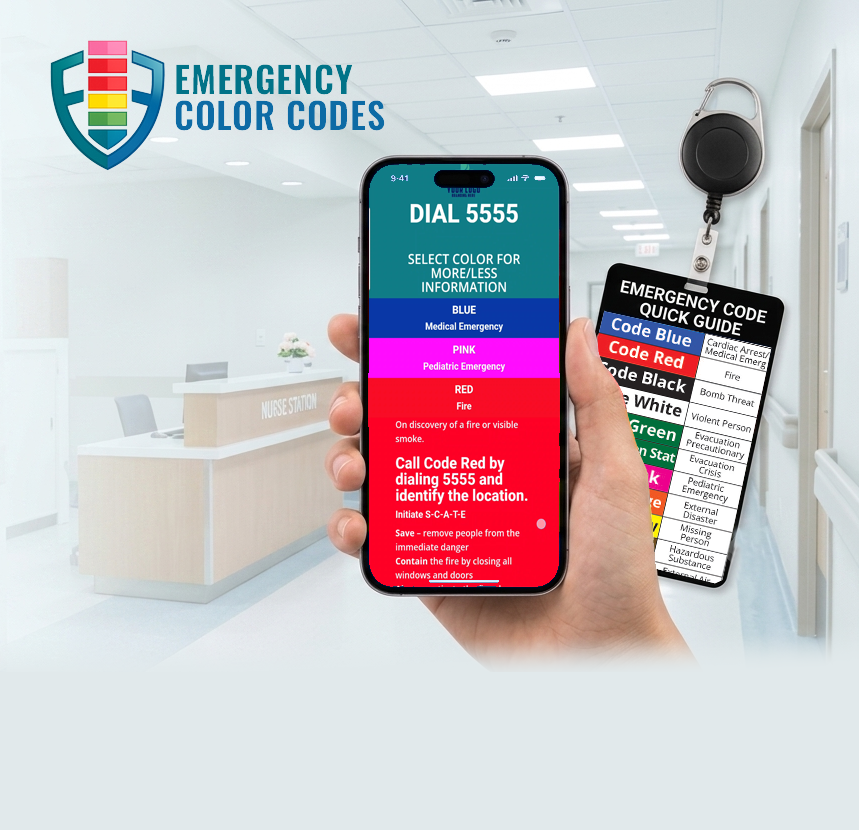
EMERGENCY COLOR CODES
AUDIT READINESS &
EMERGENCY
COMPLIANCE
Eliminate Gaps & Ensure 100% Protocol Compliance During Inspections
How to Run a Compliant Code Silver Active Threat Drill in Long-Term Care
A step-by-step operational guide for healthcare leaders to respond to an active attacker or armed individual, execute Run-Hide-Fight protocols, and meet security compliance standards.
1. Regulatory & Compliance Requirements
Under occupational health and safety legislation and long-term care regulations, facilities must maintain explicit plans for managing active violence and armed threats. Compliance auditors evaluate staff understanding of response priorities (Run, Hide, Fight), emergency communication procedures, notification protocols, and post-incident security debriefs.
2. Step-by-Step Drill Scenario Execution
Phase 1: Immediate Threat Response – Run, Hide, Fight (0–2 Minutes)
Upon hearing gunshots, observing a weapon, or identifying an active attacker:
- RUN (Evacuate): If a clear, safe escape path exists, evacuate the building immediately. Encourage others to follow, but do not let their hesitation slow you down.
- HIDE (Lockdown): If escape is impossible, enter the nearest room, lock and barricade the doors with heavy furniture, turn off lights, silence cell phones, and stay out of sight.
- FIGHT (Last Resort): Only as an absolute last resort when your life is in imminent danger, commit to disrupting or incapacitating the attacker using aggressive force and improvised items.
Phase 2: Code Silver Activation & Emergency Dispatch (Minutes 2–4)
- Overhead Announcement: If safe to access a phone station, page clearly three times over the PA system:
"Code Silver – [Location/Unit/Building Zone] – Lock Down Immediately". - Call 911: Contact emergency dispatch as soon as it is safe to do so. Provide caller location, number of attackers, physical descriptions, and types of weapons observed.
- Facility Access Control: Automated access control systems engage facility-wide perimeter locks to restrict further unauthorized access.
Phase 3: Tactical Isolation & Law Enforcement Staging (Minutes 4–15)
- Maintain Concealment: Staff and residents remain hidden, quiet, and away from windows or doors. Do not open locked doors for anyone until police give the explicit command.
- Police Entry Protocol: When law enforcement officers enter, keep hands visible, fingers spread, and raised at all times. Do not scream, point, or make sudden movements toward officers.
Phase 4: Site Securing, Debrief & All-Clear (Post-Event)
- Law Enforcement Command: Police perform systematic floor-by-floor clearances and declare the active threat neutralized or cleared.
- Overhead Announcement: Only after law enforcement authorization, page clearly:
"Code Silver – All Clear, Code Silver – All Clear." - Post-Event Trauma Support: Establish psychological first aid for staff and residents, preserve scene integrity for criminal investigation, and document the event log.
3. Common Audit Failures & Corrective Actions
| Audit Area | Common Failure Point | Compliant Action Required |
|---|---|---|
| Door Barricading Knowledge | Staff attempt to hide behind unlocked doors without using available physical barricades. | Train staff on rapid room fortification, including wedge usage, heavy furniture placement, and door locks. |
| Unsilenced Mobile Devices | Cell phones ringing or vibrating inside hiding areas, revealing concealed staff or resident positions. | Enforce immediate silent mode protocols (disabling both sound and vibration) upon declaring Code Silver. |
| Police Interaction Errors | Staff run toward entering tactical officers with items in hand or making fast arm movements. | Educate personnel to keep hands completely empty, open, elevated, and visible whenever police are present. |