
Built for Individual LTC Homes and Hospitals
EMERGENCY COLOR CODES
AUDIT READINESS &
EMERGENCY COMPLIANCE
Eliminate Gaps & Ensure 100% Protocol Compliance During Inspections
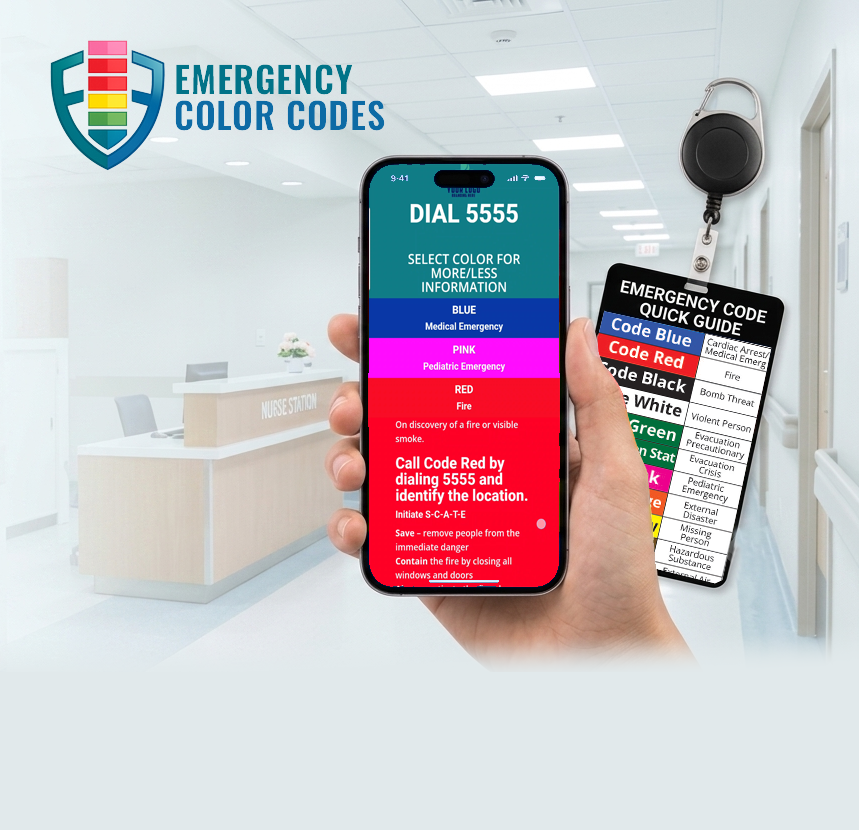
EMERGENCY COLOR CODES
AUDIT READINESS &
EMERGENCY
COMPLIANCE
Eliminate Gaps & Ensure 100% Protocol Compliance During Inspections
How to Run a Compliant Code Blue Medical Emergency Drill in Long-Term Care
A step-by-step operational guide for healthcare leaders to manage cardiac arrest, acute respiratory distress, CPR response, emergency EMS transfer, and regulatory compliance.
1. Regulatory & Compliance Requirements
Under long-term care health and safety standards, facilities must maintain a rapid resuscitation response system. Compliance auditors evaluate time-to-first-compressions, AED application speed, staff adherence to Advanced Health Care Directives (DNR orders), and complete clinical documentation following a medical emergency.
2. Step-by-Step Drill Scenario Execution
Phase 1: Immediate Recognition & CPR Activation (0–1 Minute)
Upon discovering an unresponsive resident or individual experiencing acute cardiac/respiratory failure:
- Assess & Call for Help: Check for responsiveness and normal breathing. Shout immediately for assistance and yell to activate Code Blue.
- Verify DNR Status: Instantly check the resident's chart or emergency band for Do Not Resuscitate (DNR) directives before initiating invasive interventions.
- Initiate CPR: If no DNR is present, place the resident on a hard surface (or insert CPR board under mattress) and begin high-quality chest compressions immediately.
Phase 2: Code Blue Overhead Page & Crash Cart Deployment (Minutes 1–2)
- Overhead Announcement: Page clearly three times over the PA system:
"Code Blue – [Location/Unit/Room Number]". - Crash Cart & AED: Designated runner retrieves the emergency Crash Cart and Automated External Defibrillator (AED) and delivers it directly to the room.
- 911 Dispatch: Charge Nurse or designated receptionist dials 911 immediately for Paramedic/EMS emergency response.
Phase 3: Resuscitation Team Roles & EMS Escort (Minutes 2–10)
- Airway Management: Second responder prepares bag-valve-mask (BVM) ventilation and supplemental oxygen.
- AED Analysis: Apply AED pads to the resident's chest, follow voice prompts, and clear the area before delivering a shock if indicated.
- EMS Runner Assigned: Assign a staff member to meet EMS at the main entrance, hold elevators open, and guide paramedics directly to the scene.
Phase 4: Transfer, De-escalation & All-Clear (Post-Event)
- Paramedic Handover: Provide Paramedics with SBAR verbal report (Situation, Background, Assessment, Recommendation) along with transfer chart envelope.
- Overhead Announcement: Once the situation is transferred or stabilized, page clearly:
"Code Blue – All Clear, Code Blue – All Clear." - Post-Event Debrief: Restock Crash Cart immediately, complete clinical incident documentation, and conduct staff debriefing.
3. Common Audit Failures & Corrective Actions
| Audit Area | Common Failure Point | Compliant Action Required |
|---|---|---|
| DNR Directives Check | Delays in confirming DNR status leading to confusion or inappropriate CPR initiation. | Ensure color-coded DNR identifiers are clearly documented on the chart tab and eMAR profile. |
| Crash Cart Readiness | AED batteries dead or suction units non-functional during emergency response. | Perform and log daily visual inspects of AED status indicators and Crash Cart tamper seals. |
| EMS Escort Bottlenecks | Paramedics delayed at locked entrance doors or waiting for elevators. | Designate an "EMS Escort" role immediately upon 911 call to unlock doors and hold elevators. |