
Code White Drill Readiness & Best Practices
🏥 ONTARIO LTC SAFETY & DRILL SERIES |
CODE WHITE — MANAGING AGGRESSIVE BEHAVIOR & FLTCA COMPLIANCE
Under Ontario’s Fixing Long-Term Care Act (O. Reg. 246/22, s. 269), LTC homes are required to execute a Code White (Violent / Aggressive Behavior) drill at least annually across all shifts.
In long-term care settings, responsive behaviors or sudden workplace aggression require immediate de-escalation while balancing resident dignity and staff protection.
During a Code White response, every second counts. The designated response framework involves:
- 🩺 Charge Nurse / Clinical Lead: Assesses immediate risk and leads de-escalation.
- 🛡️ Designated Floor Responders (PSWs/RPNs): Isolate the area and secure nearby residents.
- 📱 Administrative / On-Call Lead: Coordinates escalation or police involvement if physical safety is compromised.
The Goal: De-escalation, personal safety containment, and rapid restore-to-care—without relying on dense paper binders stored at the nursing station.
Best Practices for Effective Drill Planning:
- Shift Rotation: Ensure night and evening shifts undergo live or scenario-based walkthroughs, not just day staff.
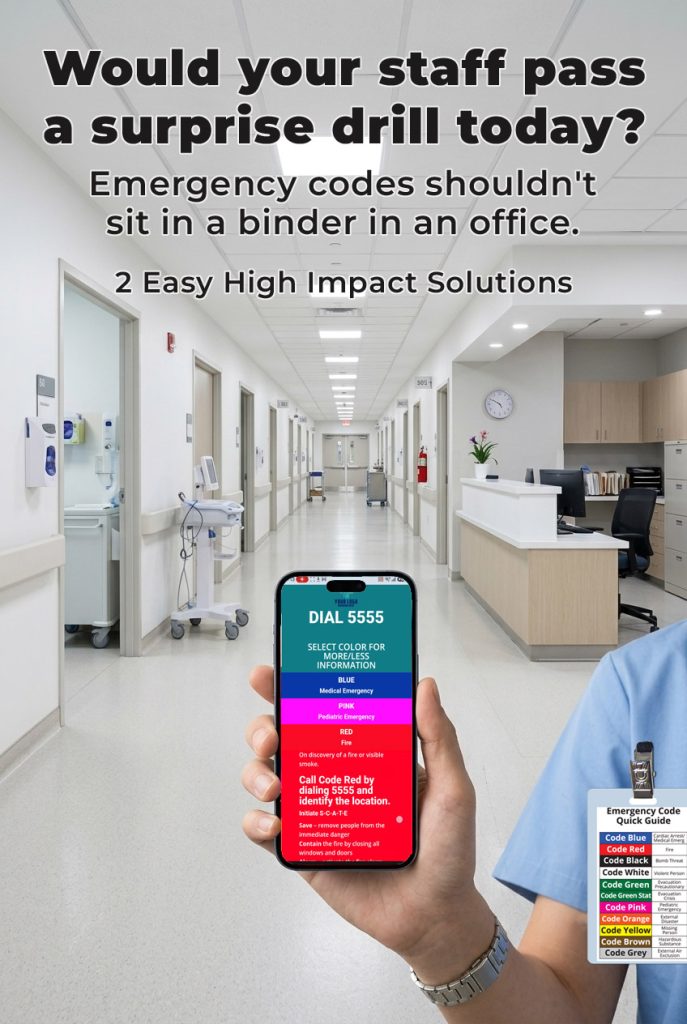
- Point-of-Care Access: Equip staff with instant reference tools (like badge-backed action cards or offline mobile access) so response steps are clear without leaving the floor.
- Timed Evaluator Scoring: Track elapsed response times from the initial call-for-assistance to team arrival and debrief.
💬 For LTC Administrators, DOCs, and Safety Leads:
How does your team ensure night-shift staff are fully confident in executing Code White de-escalation steps? Do you rely on physical action cards or digital tools?
I’d love to hear how different homes handle their mandatory annual simulations.
⚠️ Educational content based on O. Reg. 246/22 standards. Specific policies and action cards vary by facility.
#LongTermCare #LTC #CodeWhite #HealthcareSafety #FLTCA #EmergencyPreparedness #DirectorOfCare #WorkplaceSafety #SeniorCare
Key Adjustments Made for Your Market
- Contextual Shift: Tailored from Emergency Department settings to Long-Term Care / Retirement Home environments (addressing responsive behaviors and PSW/RPN team structures).
- Regulatory Integration: Referenced specific statutory standards (O. Reg. 246/22) to establish immediate compliance authority.
- Subtle Value-Add: Highlighted the need for point-of-care tools (offline mobile access / badge cards) without turning the post into a pushy advertisement.